Chicken feed & daily supplies
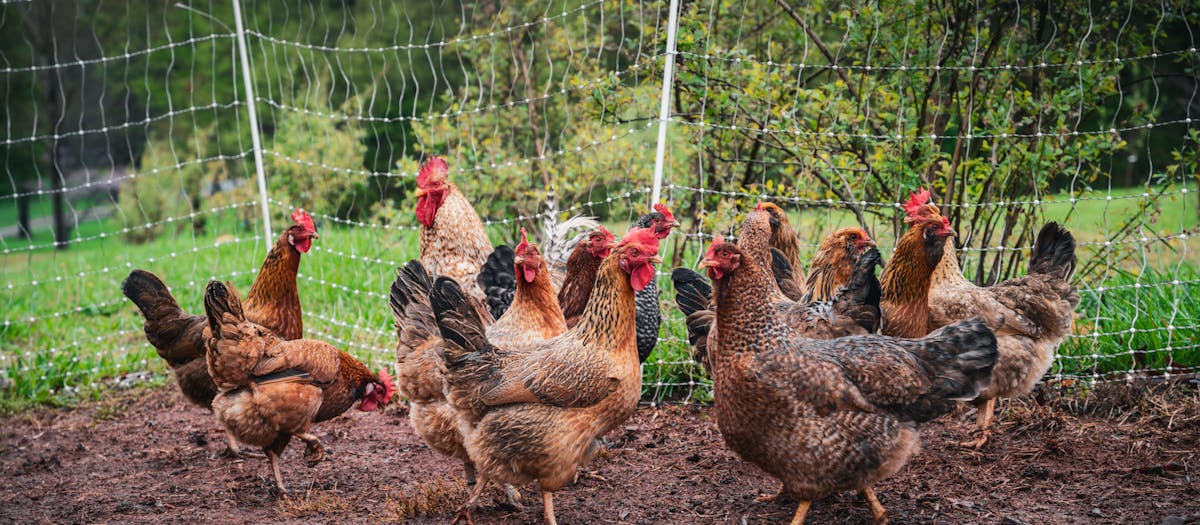
The consumables side of keeping chickens. Get the feeders right once and they outlast everything else; get the feed wrong and you'll see it in poor laying or soft-shelled eggs within a couple of weeks. This silo organises every daily-supply decision into four clusters: feed by life stage, feeders and waterers, bedding, and the supplements that actually matter.
A note on diatomaceous earth before we start. Every backyard-chicken site treats it as a miracle product. It's a useful coop hygiene aid in a clean coop. It is not a parasite treatment plan. If your flock has visible mites, lice, or worms, you need a poultry vet — not a bag of dust.
Feed by life stage
Most decisions here are timing decisions. Four stages, four feeds.
Starter (0–6 weeks)
- 18–20% protein, finely crumbled for tiny beaks.
- Medicated (amprolium for coccidiosis prevention) or unmedicated — choose based on your hatchery's vaccinations and your local poultry-club's consensus.
- Don't dose medications without veterinary input. Stick to feed-as-labelled.
Grower (6–18 weeks)
- 15–17% protein. Transitional, slower-grow phase.
- Don't switch to layer feed early — calcium overload damages young kidneys.
Layer (18+ weeks)
- 16–18% protein PLUS 3.5–4.5% calcium.
- Calcium drives eggshell production. Without it, soft shells and brittle hens.
- Pellets, crumbles, or mash — form factor matters less than the calcium content. Pellets generally waste less.
Scratch grain
- A treat, not a meal. Cap at 10% of total diet.
- Low protein, high carb. Useful for winter warmth (digestion generates heat) but never a complete food.
Feeders & waterers
The infrastructure layer. Get these right once and they outlast everything else on this list.
The four feeder types
- Treadle feeders — Step-on, weight-activated. Heavy, weather-proof, rodent-proof. $80–120. Worth every cent for outdoor setups where rats and raccoons are an issue.
- Hanging feeders — Cheaper ($30–50), better for sheltered runs. Hang from a chain or rope so they swing — discourages perching on top.
- Trough feeders — Cheapest ($15–30) and worst for waste. Birds scratch out half the feed. Skip for adult flocks; useful for chicks where the narrow lip is the safety feature.
- PVC-pipe DIY feeders — Cheap to build, low waste, doesn't keep rodents out. Fine if your coop is otherwise rodent-secure.
Waterers
- Standard plastic gravity-fed waterer — $20–40. Fine in mild climates.
- Heated waterer (built-in or separate base) — $60–100. Essential in any climate that drops below freezing. The cost buys you not breaking ice every morning at 6 AM in February.
- Nipple waterers — Drip-style, attached to a PVC pipe or bucket. Cleaner than open bowls (no algae) but birds need a few days to learn them.
Sizing
- 1 gallon of water per 4 hens daily as a rough baseline. Double in summer.
- 1 pound of feed per 4 hens daily for a layer flock.
Bedding
Bedding does three jobs at once: cushions eggs in nest boxes, absorbs moisture and droppings on the coop floor, and acts as the base layer for the deep-litter method.
Four common options
- Pine shavings — The default. Cheap ($5–8 per bale), absorbent, mild smell, composts in 6–12 months. Avoid cedar shavings — toxic to chickens (respiratory).
- Hemp bedding — Premium. Denser, lower dust, longer-lasting than pine. 2–3× the price but 2–4× the absorbency. Worth it for asthma-prone keepers or deep-litter setups.
- Sand — Cheap, drains fast, scoopable with a litter rake. Best in dry climates. Heavy to move and not great for nest boxes.
- Straw — Cheap, looks pastoral. Worst absorbency of the four. Skip unless you have free straw and a specific reason.
Supplements & coop hygiene
The non-feed daily-supply layer. None of these are optional for a layer flock, and all of them are common rookie misses.
Oyster shell (calcium)
- Free-choice in a separate dish — never mixed into the feed.
- Laying hens self-regulate calcium intake when oyster shell is available.
- Don't give to chicks or pullets — too much calcium damages young kidneys.
Grit
- Insoluble grit (granite-based, NOT calcium) — required for digestion.
- Free-choice in a separate dish.
- Birds with access to dirt and small stones may get enough naturally. Coop-bound flocks need supplemental grit.
Diatomaceous earth
- Use: coop hygiene aid. Sprinkle in dust baths, bedding, and nest boxes to reduce moisture and discourage external parasites.
- Don't use: as a parasite treatment plan. If your flock has visible mites, lice, or worms, see a poultry vet.
- Food-grade only. Pool-grade is processed differently and dangerous to breathe.
Probiotics + electrolytes
- Useful during heat stress, transport stress, or post-illness recovery.
- Not a daily addition for healthy birds.
Featured guides
The current published guides in this silo. More land each batch.
The complete chicken feed guide
Starter, grower, layer, scratch — what to buy at what age, and the brands worth buying.
Hemp bedding for chickens
Is the premium-price bedding option worth it? Comparison with pine shavings, top picks.
Landing next: Commercial chicken feeders, Diatomaceous earth for chickens, Calcium for chickens, Chicken feeder types, Chicken waterer guide, Organic vs non-GMO feed, Layer feed vs crumbles, and Grit for chickens.