Baby chicks
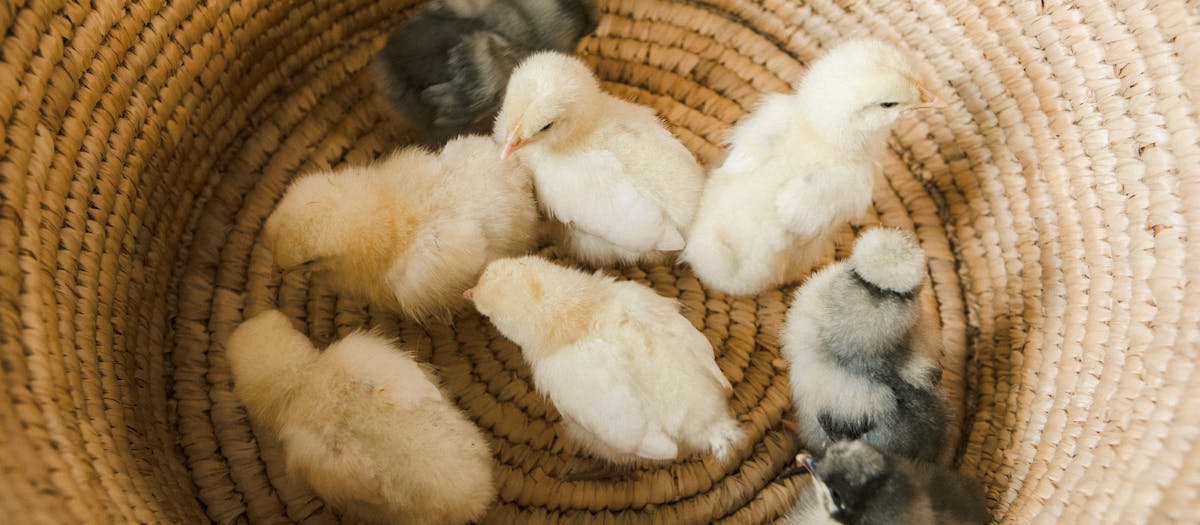
The first 30 days are where most rookie mistakes happen — and where the most preventable losses occur. This silo walks you through every gear decision for raising baby chicks: brooder setup, heat plate vs heat lamp, starter feed, bedding, and the week-by-week milestones.
A note on chick health. Chicks can go from "looks fine" to "in trouble" inside a few hours. This silo covers gear and routine care. Anything that looks medical — pasty butt that recurs, abnormal droppings, lethargy, eye discharge, sudden lameness — needs a poultry vet or your state extension's poultry specialist, not a forum thread. Never substitute internet research for a vet call.
Week-by-week — what to expect
The chick timeline isn't complicated. It's just precise.
Days 1–7 (settling in)
- When they arrive, dip each chick's beak in the waterer once so they learn to drink.
- Watch for pasty butt — droppings stuck to vent feathers. Clean gently with warm water if present. If it recurs, call a vet.
- Temperature: 95°F (35°C) directly under the heat plate.
- Resist handling them for the first 72 hours. The urge is real. Stress kills chicks faster than cold does.
Weeks 2–3 (feathers replacing fluff)
- First wing and tail feathers visible.
- Drop temperature by ~5°F per week — 90°F at week 2, 85°F at week 3.
- Chicks start exploring further from the heat plate. Even spread = right.
Weeks 4–5 (pre-outdoor transition)
- Mostly feathered.
- Temperature: 80°F (week 4), matching ambient by week 5.
- If your climate allows, brief supervised outdoor sessions in a secure pen on warm days build resilience and introduce the future coop.
Week 6+ (transition to coop)
- Fully feathered, ready for an unheated brooder or outdoor coop in mild weather.
- Adult-flock integration: never before week 6, and run a 1–2 week "see but don't touch" period with a run divider before mixing.
Featured guides
The current published guides in this silo. More land each batch.
Landing next: Baby chick care guide (first-30-days pillar), Brooder setup walkthrough, Chick starter feed buyer's guide, Best brooder bedding, When to move chicks outside, and Sexing chicks.
What you need for chicks
The five essentials, in priority order:
- Brooder container. A large cardboard box, a plastic tote ($40), or a dedicated brooder ($100+). The container matters less than the heat source.
- Heat plate. Strongly preferred over a heat lamp. Mimics a broody hen, draws a third of the wattage, doesn't cause coop fires. Don't compromise here.
- Pine shavings bedding. NOT cedar (toxic — respiratory). NOT newspaper alone (slippery, causes splayed legs).
- Chick starter feed. 18–20% protein, finely crumbled. Medicated or unmedicated per your hatchery's vaccinations.
- Shallow chick waterer. Quart-jar style with the narrow trough lip. Deep waterers drown chicks.
Plus the under-rated:
- Thermometer. Place it at chick-level under the heat plate, not on the brooder wall.
- A low roost stick. A 1-inch dowel placed 2–3 inches off the ground from week 3 onwards. Chicks naturally roost; give them somewhere to learn.
- A second waterer. When the first inevitably gets full of bedding or droppings, you'll be grateful.
What not to do
The same handful of mistakes appears in 80% of first-year chick disasters. None are complicated to avoid.
Heat lamp without a guard near combustible bedding
Heat lamps cause coop fires. Every winter, multiple US backyard keepers lose their flock — and sometimes their barn — to a heat lamp tipping over. Heat plates eliminate this risk for about $50 more upfront. If you remember nothing else from this silo, use a heat plate.
Cedar shavings as bedding
Cedar has aromatic oils that are toxic to chickens' respiratory systems. Use pine shavings. The two look almost identical in the bag — read the label, every time.
Deep waterer in the first week
Day-old chicks drown in an inch of standing water. Use a quart-jar style with the narrow trough for the first two weeks. Switch to a regular waterer after.
Handling chicks during the first 72 hours
Stress kills more chicks than predators do at this age. The first three days are critical — let them settle. The bonding window opens at week 1, when they're stronger and more curious.
Adult-flock introduction before week 6
Adult hens will peck (sometimes fatally) at chicks introduced too early. Wait until chicks are fully feathered, then run a 1–2 week "see but don't touch" introduction with a barrier or run divider before mixing.